• Rebuild 2: Starting the Sequel

    Rebuild on Kongregate
    #3 on Kongregate with 2,000,000 plays!

    My game Rebuild was more successful than my highest hopes. It’s nearing 2 million plays just on Kongregate alone, and is still the #3 game in their rankings. So there’s no doubt I’ll do a sequel and it’s about time I got started!

    I’ve gotten heaps of suggestions by email, pm, and in the forums at TwoTowers, Kongregate and Newgrounds. I’ve been collecting these and trying to get a feel for how people are playing the game.

    I noticed something interesting: many people play to completion, trying to get all four endings in one game, preferrably on the same turn. This is not at all how I play; I just want to get to an equilibrium where I’m not in constant danger of being wiped out, usually around turn 75. Mopping up the remaining 2/3 of the map isn’t interesting to me, so I didn’t make a lot of content for the lategame. This is how I imagined a game going:

    • Turns 1 – 24: worry about food
    • Turns 25 – 44: worry about zombies
    • Turns 45 – 74: worry about happiness
    • Turn 75: either you’ve stabilized and won, or you’re dead and don’t know it yet

    These numbers are hardcoded: zombie mobs first arrive on day 25, and on day 45 the zombie spawning caps out and new happiness-related events start happening. But people are playing until turn 250 and conquering all 100+ squares. So, my first priority for the sequel is to take this play style into account and make sure the game stays interesting for longer, especially on easy difficulties. There will be many more random events, and branching storyline events where you have to answer yes or no questions which influence future events. Maybe even factions you can effect, or special named npcs that join the fort if you meet certain conditions.

    I was also super pleased to see people swapping stories of their survivors; the funniest names or most eyes lost (I saw 9) and the random stuff that happened to them. So my second goal is to make survivors more customizable and unique, with equipment and skills and levelling. Varying skin and hair color and yes, there will be things to lose other than eyes.

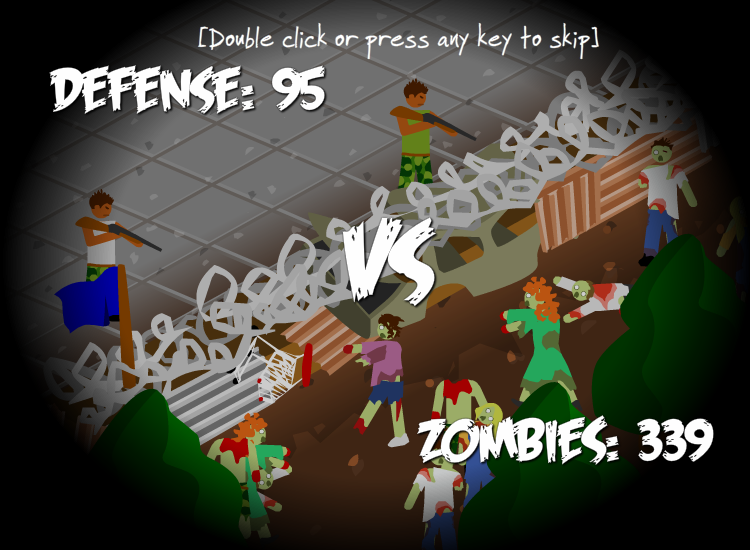
    Zombie Attack Art
    How not to do art: don't draw things for 20px high then stretch them to 150px

    The biggest complaint was the art (though some people liked it’s simplicity), followed by the fact that the zombie attacks weren’t interactive. The art will get some attention (hopefully with help from someone else), specifically the animations which I admit are totally pathetic. No promises, but I also want to replace the attack animation with a minigame that changes your odds by +/- 10%. Skippable of course, and hopefully more interesting than your usual point and click shooter.

    So those are the big 3 (more lategame content, more unique survivors, better zombie attacks), but of course there will be new buildings and effects, improved art all around and I’m going to address some stuff that drives everybody (including me) crazy about Rebuild, like:

    • All the clicking involved in sending 10 guys on a mission in the lategame
    • Having to move people on and off guard duty all the time
    • Squares filling up with zombies the turn after you clear them
    • 20 zombies spawning every turn in the last couple squares on the map
    • Losing a single 3% danger fight in Harder or Nightmare can ruin you

    Of course there are a lot of suggestions that won’t make it in, like I’m not going to attempt multiplayer or add an XCom-style tactical battle system (I wish, that would be awesome!). I’m already starting a list of ideas for Rebuild 3 – hah, we’ll see!

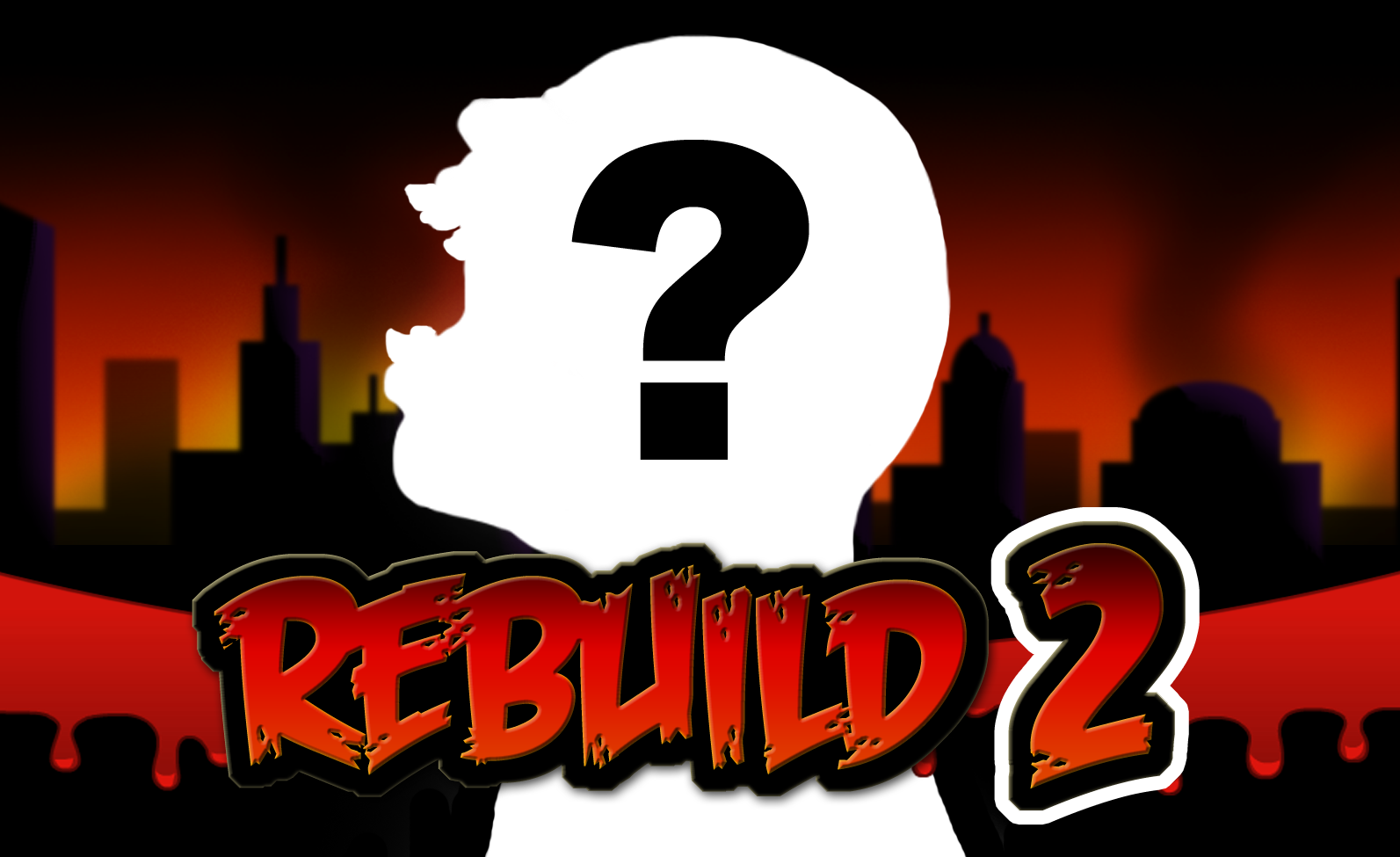
    Rebuild 2 Title
    The new look may be for you to decide!

    I’m looking for a vector artist to help me out this time, so if you’re interested in working on Rebuild 2, drop me a line with your portfolio.

    There are a lot of other little things that may or may not make the cut, and the possibility of versions for iPhone and other platforms. But I’m just getting started, so there’s still time to send me your suggestions!

  • Word Up Dog: Creating Android apps with Adobe Air

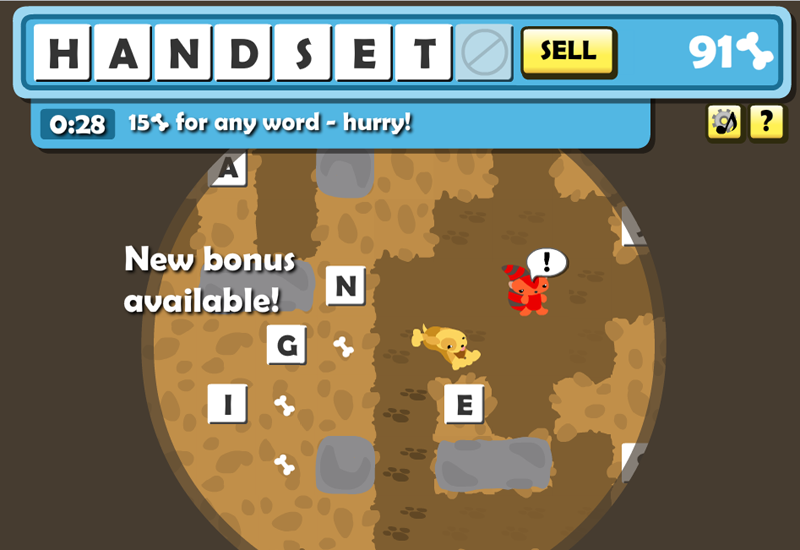
    A screenshot of Word Up Dog the game
    Word Up Dog: represent, yo!

    Having already optimized my game Word Up Dog so that it runs relatively well in a browser on an Android phone, I was ready to package it up as an installable app. Adobe Air makes this easy to do with few changes to your original code. Adobe has a Flash CS5 plugin to do it, but I prefer to do things the free-and-open way when I can, so here’s how I built the Android app using only FlashDevelop and other free Windows tools.

    First, I don’t recommend the Android emulator. I struggled with getting emulator-compatible versions of the Air packager and Air runtimes installed. There didn’t seem to be much advantage so use a phone if you can get your hands on one.

    I followed several tutorials and honed the process down to this:

    1. Download the Air 2.5 SDK, paste it into a copy of your Flex SDK directory, and set FlashDevelop to compile using the result
    2. Start a new FlashDevelop AIR AS3 project
    3. AddChild your existing game in Main.as
    4. Add NativeApplication handlers to prevent the phone from idling
    5. Add android-specific settings to application.xml (here, have mine)
    6. Generate a certificate using
      adt -certificate -cn WordUpDog 1024-RSA certificate.pfx yourpass
    7. Build your air project to create WordUpDog.swf
    8. Package the swf into an apk file with
      adt -package -target apk -storetype pkcs12 -keystore certificate.pfx -storepass yourpass WordUpDog.apk application.xml -C . WordUpDog.swf iconsFolder
    9. Upload WordUpDog.apk to your phone and baby, you’ve got a stew going
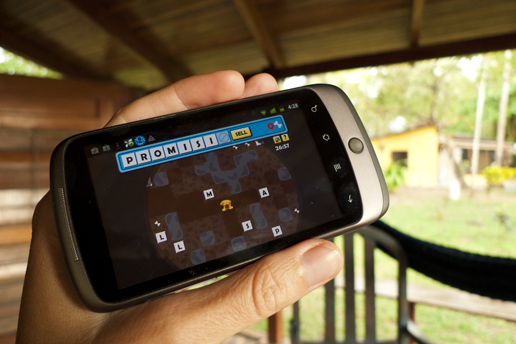
    Word Up Dog on a Nexus One
    Victory – the Air for Android app is installed!

    I was prompted to install the Air interpreter the first time I ran the game on my Nexus One, then it behaved just like any other app. The performance was about the same as running the SWF through the phone’s browser, but of course there are advantages to being installed. I could force the game to stay in landscape perspective and add a customized handler to deal with incoming phone calls. Not to mention being able to upload and sell it on the Android app store!

    Next I’ll tackle Air on the iPhone.

  • Word Up Dog: Flash optimization for mobile platforms

    Word Up Dog Splash Screen
    Word Up Dog: Yo Diggety.

    I just put my new game Word Up Dog up for bidding on FlashGameLicense. It’s very different from my first game Rebuild (I needed a break from zombies!). In Word Up Dog, you play a dog digging underground for letters to anagram, aided by cute animals who speak in 90’s hiphop lingo. It has a simple interface and can be played in short sessions, so it’s a good fit for mobile platforms like the iPhone, iPad and Android phones.

    When uploading a game to FlashGameLicense, one of the options is a “Mobile-ready” checkbox. Here’s what I did to make Word Up Dog mobile ready…

    I have a Nexus One Android phone, which unlike the iPhone can run Flash in its browser. So as a first test I pointed it at the totally unoptimized game swf. I was pleased to see the game load quickly and error-free, and the graphics looked good on the bright little screen. The SimpleButtons were easy to hit and the mouse over state even showed briefly. Movement using both the trackball (which fires up/right/down/left KeyboardEvents) and touch worked correctly. But the framerate was crappy, and touching even a blank area on the screen brought the game to a crawl.

    First, I looked at how I was rendering the map, a 800×550 sprite containing ~150 vector shape tiles. The tiles had cacheAsBitmap=true which had a noticeable effect on my pc, but it was hard to tell if it was doing anything on Android. Instead I manually drew each of the tiles to a Bitmap, which improved the framerate significantly. Drawing all the tiles onto one huge 800×550 bitmap was even better, but the way my tiles overlap made updating (by blitting) difficult.

    I improved the movement speed by jumping the screen from square to square instead of smoothly scrolling it. I downgraded the target fps from 30 to 24, and simplified the gui animations so that instead of fading in, notice text pops into existance. I replaced contrast, emboss and drop shadow filters with graphical approximations. I cached the dog’s shape tween animations as Bitmaps using TouchMyPixel’s AnimationCache. Each of these things had a small but helpful effect on the framerate.

    Now to tackle the touch issue. Holding down on any part of the screen lowered the framerate by 10fps, even after stripping out all MouseEvents. I couldn’t recreate it on pc (even via air at 250fps) or see evidence of it in a profiler. My guess is that Flash just isn’t very efficient at dealing with touch screens. What finally improved things was setting mouseEnabled=false and/or mouseChildren=false to everything in the game that isn’t meant to be clicked. This seems to be especially important for TextFields.

    Flash Preload Profiler
    Tracking memory with the Flash Preload Profiler

    Finally, memory. The free FlashPreloadProfiler told me I was using 50mb, and showed the number of instances of each class and time in functions. Adobe’s Flash Builder Pro profiler gave me additional info including function stacks and the momeory used by each class.

    I got my memory down to 20mb by instantiating some map-related things when they came into view rather than at game start. I verified that I didn’t have any memory leaks such as objects or handlers left around after exiting to menu and starting a new game.

    To recap my optimizations:

    • Draw shapes to Bitmaps instead of relying on cacheAsBitmap
    • Simplify gui animations
    • Cache character animations as Bitmaps
    • Remove filters
    • Set mouseEnabled=false and/or mouseChildren=false on non-clickables
    • Other best practices I follow include cutting down on EnterFrame events, avoiding masks, and using strongly-typed variables.

    I can now run Word Up Dog on my phone through Chrome at 20-24 fps! Not perfect and it will be slower on older phones, but I’m calling it a success. In my next post I’ll talk about packaging the game up using Air so I can sell it in the Android and iPhone app stores.

  • Super Crate Box tells us the magic number is 600

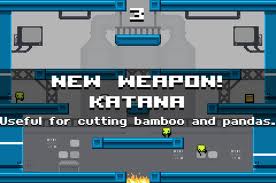
    Hats off to Vlambeer for making Super Crate Box. A great single screen platformer. Before it was nominated for a design award at the IGF it was nominated for love by the judge in my heart. And in my heart it took the grand prize.

    I found Super Crate Box while we were in Honduras and when you’re at the end of an impassable dirt road with no TV and spotty Internet what you really need on your hard-drive is a good super-hard game with both running and gunning. I played the hell out of it and am proud to have 100% unlocked everything.

    So why is it so fun? To answer that it would be helpful if you had at least a passing understanding of Super Crate Box (no I will not be acronyming that). There’s really no reason I should have to describe it to you. Just go play It. It’s free and more fun than reading.

    During my Super Crate Box phase we made a trip to Pigeon Keys with our friends Julie and Ed who run Radical Adventures. It was an amazing trip! We’d done a lot of snorkeling before but the waters off Pigeon Keys were perfectly clear. So clear it was like there was no water at all and we were flying 10 meters over the ground in a giant beautiful Catamaran pointing out fish and rays like you might point out birds. Diving off the boat became like bungee jumping. This one novel twist on an experience we had had many times before made it go from fun to once-in-a-lifetime amazing. Our brain loves to be in a familiar situation with a twist because it loves to learn.

    Video games are about learning and our brains do a lot of learning through pattern matching. When we have a decision to make we compare the situation to previous situations we’ve been in. If we can can find an identical one and we know how to solve it then we just do the same thing we did back then. If we can’t associate it with a previous situation at all we panic and do something random. But if it’s similar but slightly different to a previous situation, or better, is a combination of previous situations then we get creative. We try a combination of stuff that worked before. And this can be genius. This is an incredibly powerful tool evolutionarily so it makes sense that our brain likes to do it and it’s fun.

    Super Crate Box is in the business of giving us these slightly-different problems to tackle. It has dedicated its life to this task and I applaud it for its selfless dedication to making me joyful. It manages this by taking a simple proven game (jumping around and shooting stuff) and combining it with a dizzying array of weapons, all of which are slightly different from each other. “But that’s hardly new, lots of games have a dizzying array of weapons” you say. Yes that is true, imaginary reader in my head, you are correct. But Super Crate Box knows you’re too shitty a game designer to use them properly.

    Games are about learning and our brain really likes to learn. But it doesn’t like to learn just any old things. It likes to learn helpful useful things. It wants to learn how to win! Most games with a dizzying array of weapons let you chose which ones you want to play with. Super Crate box recognises this as a fault. The better you get with a weapon in Super Crate Box the less you play with it. The better you are with a weapon the more ruthlessly efficient you are at getting to the next crate and the next random weapon. In this way Super Crate Box refuses to let you specialise. It refuses to let you get good with one weapon and ignore all the others, which is how I (and I assume most people) play all those games with a dizzying array of weapons. We play games that way because our brain recognises that its often more efficient to get better with something we understand than to start over learning something we don’t. Unfortunately that’s less fun but our brain is a shitty game designer.

    By forcing us into a situation we’ve already been in but with an unfamiliar weapon Super Crate Box gives us a problem we can tackle creatively. And when we succeed at one of these problems it feels great! In fact it’s probably possible to mathmatically determine the number of possible situations and therefore the number of situates which should be contained in the perfect game (assuming Super Crate Box is the perfect game). Say there are 15 weapons (amazingly I can’t find a list) and say there are 40 unique board states (I’m pretty much just making that up) that means there are 600 totaly states. So take a look at your favorite game or the game your making and count the states. 600 = IGF Design Nomination!

    Anyway, once more doff your hat to Raimi Ismail and Jan Willem Nijman for being smarter than the human brain and giving us all something slightly different to play.


    Also thanks that there is this

  • A Day In the Life of a Traveling Game Author

    It occured to me that some people might be curious about what life as a traveling game author is like. I decided a good way to give you a look into our every-day life would be to write up a day-in-the-life. Here, presented for your edification, is yesterday:

    I woke up at about 6:00 am. I don’t know what it is about the tropics but Sarah and I tend to get up with the sun. Our Internet is usually pretty good in the morning so I reached for the laptop and checked the emails and the facebooks. After tooling around online for an hour or so I got up and greeted the day.

    As Sarah slept I wandered down to the beach. I couldn’t see another soul on the eight kilometer stretch of sand and as I walked I left the first footprints since last night’s high tide. It was before the heat of the day and I waded across a few low streams as I mulled over game design problems. I had done my first in-person playtest the previous day so I had a lot to think about. I like to walk and move around when I’m thinking and I like to be somewhere interesting when I think about game design. I’m not sure what role conscious thought plays in coming up with novel ideas and solutions but sitting on a log and watching hermit crabs scurry around seems to generate a close to optimal mindstate. As I was watching the hermit crabs I had a great idea. Actually it was a really old idea that had been rattling around in my head since I first started working on the game. Only now, four months later, was it apparent that this idea might be the puzzle-piece I needed to solve my problems. Play testing is a magical thing.

    contemplationWell when you have a perfect puzzle piece in your head you can’t sit around watching hermit crabs. You have to go slot it into the puzzle! I wandered back over the streams and found Sarah awake and eating breakfast. We talked about some crazy bugs she’s trying to track down in her game Word Dog while I ate some (very unexotic) corn flakes. After I slotted the puzzle piece in I started playing with the new version of the game. It felt really good and I had Sarah give it a play to get a second opinion. It was working really well for her as well and I started to get excited as I imagined other people really liking it. This feeling is like mother’s milk to indie game devs. The thought of players feeling that same soaring joy that you feel playing your game is what keeps you going through the months of doubt and grunt work.

    But you can’t do grunt work with an empty stomach and we were in serious need of supplies. We grabbed a backpack, locked up the house, and headed for the beach. We live in Pochote, a tiny fishing village. You can get fish here but not vegetables. To get groceries we have to walk down the eight kilometer beach to Tambor. It’s a long way back and forth in the Costa Rican heat but as far as grocery trips go an 8k walk down a sandy beach butressed by palm trees with scarlet macaws flying over your head isn’t too bad. On the way back we stopped for an hour of body surfing in the larger than average waves.

    We go on a lot of walks no matter where we are in the world and the conversation is usually dominated by talk about games. I really like walking to think about game design. You’re seeing new and interesting things around you and this seems to fire off odd and productive thoughts. Where ideas come from is a grand mystery to me but filling your eyes with exotic sights and talking about what you’re thinking with another game author seems to bring them out of hiding.

    When we get back I’m excited enough to grab the laptop and head next-door to do a little more in-person play testing. We live next to a bar and children’s music school run by a family of Canadian Costa-Ricans. That sounds like an odd mix and maybe a mix that you wouldn’t want to live next to without ear protection but that’s really not the case. Harmony Music School and Gabe’s Bar are as wonderfully as the family running them. They’ve made this tiny fishing village one of our favorite places in the world and they’re in competition with places like Tokyo and Istanbul and Edinburgh. The best part of travel is the people and the people here are great.

    Gabe is about our age and is my local play-tester. If the game was in a more finished state I’d get everyone I could lay my hands on to play it but as it is Gabe’s English-speaking, game-literate, mind is a perfect and rare commodity. I trucked my laptop over to the bar and Gabe sat down to give the new version a play. His reaction was really gratifying. He lamented some of the quirks of the old system disappearing but was immediately sucked into the game more deeply than before. I find it easier to trust players behaviour rather than their words so when he ran out of levels and just started playing around randomly for fun I was a happy person.

    By this point it was about three o’clock. I probably should have gotten back to the house and done some more work but instead I spent the next several hours playing pool. I have to admit, I don’t work super hard, but this day was pretty lazy even by my standards.

    Sarah was beavering away on the deck when I dropped off my laptop and I could not entice her to abandon her work to skive off with me and play pool. Not until the impromptu pot-luck started up did she make it across the yard to Gabe’s. A couple of local musicians had decided to put on a little show last night so people started wandering over to Gabe’s at about 5:00. By happenstance a lot of them had food with them. We ate Jambalaya, fish caught out of the ocean an hour earlier, and, amazingly, freshly made Kimchee! Freshly made Korean Kimchee in Costa Rica! Thank you Kee Bum!

    The concert was great and the evening was filled with the student musicians, local fishermen and guides, expats, and all the rest laughing drinking and eating.

    That’s what being a traveling game author is like. It’s like being a regular game author but much much better.