• Rebuild: selling a Flash game on FlashGameLicense

    FlashGameLicense is as far as I know the only Flash broker out there and is used by every Flash game sponsor, so it’s amazing that despite their monopoly they’re working so hard to improve it all the time. When I uploaded Rebuild I got great feedback from the FGL admins who play every game before it’s allowed up for bidding. They were really enthusiastic and helped personally through the bidding process, so I was happy to pay their 10% commission – they really do deserve it.

    FlashGameLicense sale data
    Most games on FGL sell for under $1000

    Of course, FGL doesn’t come through for everyone. The average winning bid for primary sponsorship is under $1000, usually for things like dressup or seasonal games that sponsors can easily judge the value of because they’ve seen them a thousand times before. Colin tried to find a sponsor for Fantastic Contraption through FGL, but the best he got was an offer of $300 for full ownership of the source (try 1,000 times that, asshole). This was three years ago and FGL has improved their content discovery tools, but it’s still hard for sponsors to know if a confusing, wordy game like Rebuild is going to be popular.

    I’m not at liberty to give you exact numbers (visit Andy Moore’s blog for that) but here’s how Rebuild’s bidding went on FGL. It started out with a bang, a higher-than-average-sale bid from a fellow developer looking to promote his Zombie-themed MMO by featuring it on other games’ loading screens. In my opinion a pretty cool way to simultaneously advertise and support other developers. Three other sponsors I’d never heard of joined in and by the end of the second day I’d made my minimum wage.
    Jay Is Games Review
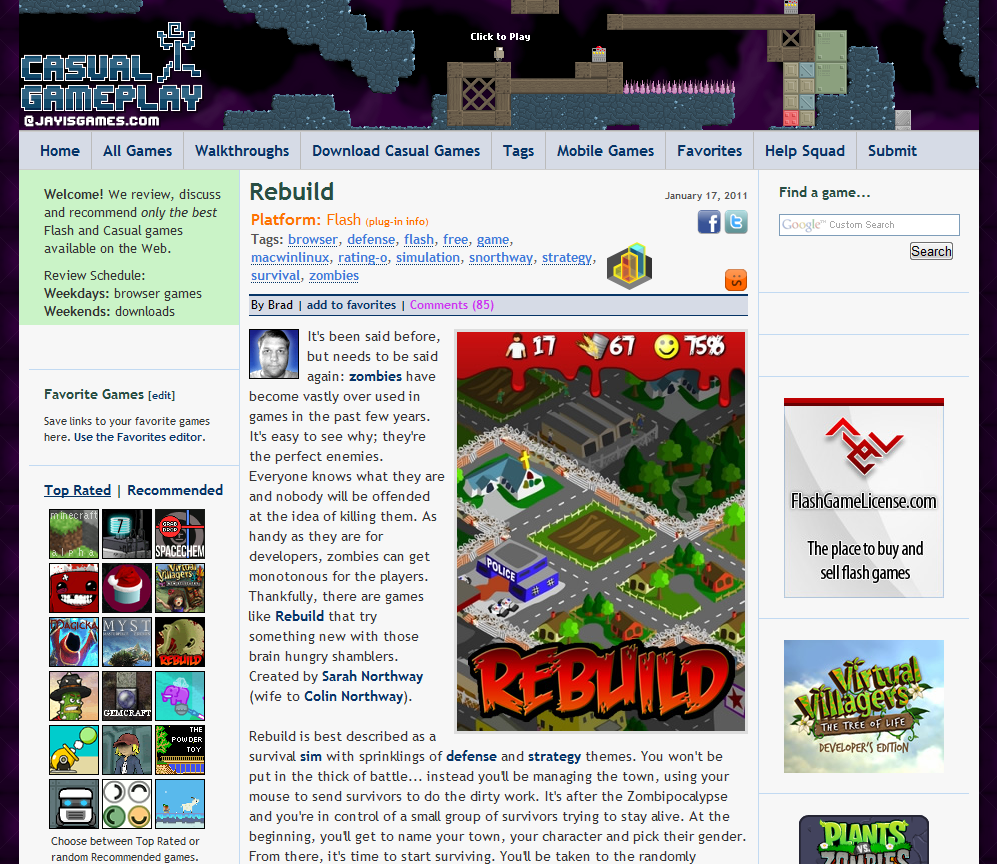
    Launch day review on Jay is Games!

    Someone put a bid in for a sitelock, which is a secondary sale made after primary sponsorship. You create a version of your game locked to one domain, stripping out ads and primary sponsor logos and implementing the secondary sponsor’s high scores api. It was early, but they were letting me know they were interested no matter who won the primary bid. JayIsGames contacted me to say they wanted to review the game when it came out. This is my go-to site for casual games so I was pretty stoked! I got excited about how fast things were happening and pulled in some contacts to invite the other major sponsors to take a look.

    Then I heard nothing – no bids – for five days.

    At this point there were two highest bids for the same amount with different contract terms. One of them included ads and extra work, so I contacted that bidder and told them that I was favoring the other offer. Bidding sprang to life again! I still hadn’t seen hide nor hair of any big sponsors, but the guys who were bidding seemed to personally like my game and were willing to go above budget for it.

    From then on, every time bidding stalled I messaged the runner-up again to let them know that, although I really liked them and their bid was great, the other offer was a little better. I gave a specific dollar amount they’d have to put in to beat it. I think I would have missed out on a lot of bids if I hadn’t done this. We were well into the holidays at this point but I got bids even on Christmas day (a marvelous present!).

    Two Towers Games logo
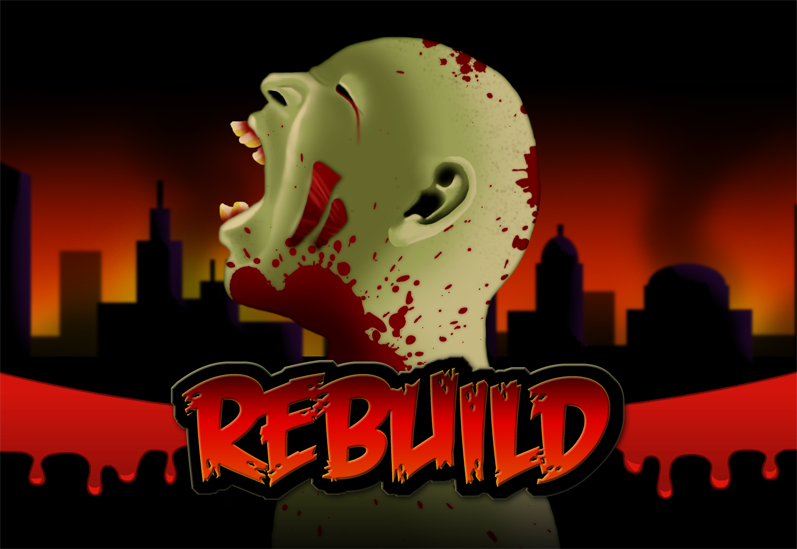
    Zombie-themed splash screen for Rebuild

    Until then the offers had been for primary licenses with additional work requirements (apis, new features, etc which were increasing in complexity as the bids went up). Two Towers Games asked about switching to exclusive, which meant I wouldn’t be able to sell sitelock versions to other sponsors. Implementing sitelock apis seemed like effort I could be spending on my next game instead, so I agreed. Their winning bid went in 20 days after bidding started and sat for another week before I accepted it. Again, I can’t tell you how much it sold for, but I will say it brought me into the FGL top-sellers list.

    My sponsor Two Towers was new on the scene, and the exclusive license gave them more time and control over Rebuild’s release and traffic. I was a little dismayed to find I’d agreed to implement ads (this is standard in most licenses) but we agreed there’d be none in the Kongregate version which was what I really cared about. It took about a week to make all the necessary changes for launch.

    Ads in Spanish
    The only CPMStar ad in Central America

    Rebuild spent the first month live only on twotowersgames.com, then I uploaded versions to Kongregate and Newgrounds and it began to make its rounds on the internet. Two Towers devised a cunning system of dynamically showing content based on a call to their servers, which lets them control on the fly which sites see ads or bonus content. I was also able to sell a few sitelocks with their approval, so long as their branding stayed on.

    For reasons that I don’t fully understand, Rebuild shot to the top of the Kong rankings, won the weekly and monthly contests and after one month is still the #3 highest ranked game with 1.5M plays.

    I’ve gotten hundreds of emails and pms with suggestions for the sequel which I’m eager to get started on, but first I need to finish the game I started during bidding: Word Up Dog. I’ll try to post updates here on the progress of both games.

  • Rebuild: Tech-nomadic game development

    Rebuild game title screen
    I described it as Zombie Sim City, except no you don

    When I started Rebuild, I wanted something I could write, sell, and be done with. I wasn’t planning another Fantastic Contraption. I didn’t want to deal with servers and payment methods and message boards. I was looking for a sponsor, following the model my friend Andy Moore used to great success selling his game Steambirds to the highest bidder.

    I’d been rolling around the game idea for about a year. I’d originally conceived it as a multiplayer Facebook game where you could see your friends on the same map and trade resources with them. I was working for Three Rings who were doing some neat Facebook games and I had hope that the Facebook audience were maturing as gamers and would soon demand more sophisticated games. Or at least real games which involve some sort of decision making and aren’t just glorified slot machines.

    As you may have guessed, I became soured to Facebook games’ simplistic play and shady propagation methods. Also, although I think multiplayer is where the future (and money) is headed, it poses extra problems like server communication, synchronization and security. Too many hurdles for my first independent game! So I thrashed out a single player version over two days which was basically the entire game right there, finished. All it needed was a little polish. Or maybe six months of polish.

    I think it took me about 3 months full time to finish it, but spread across six months in which we travelled through Europe and Central America. Some places I got almost no work done (In Czech Republic we were too busy with friends, pilsner and pork knuckles). Our month in Malta was super productive since it was hot as frack and there was nothing to do. We always planned ahead to make sure we’d have a net connection in every country, and although some were more reliable than others we had few major problems. We met up with other indie developers, and I always had enthusiastic playtesting and idiot checks from my husband Colin, who was working on his own game at the time.

    Rebuild version 0.01
    Version 0.01 after a couple days of work

    I did the design, programming and art for Rebuild; everything but the music which I licensed through Shockwave Sound. I hummed and hawed about hiring an artist to help out but I was nervous of letting a stranger in to my project and had no idea how well the game was going to do. Instead I learned a lot about vectors and enjoyed being able to switch to something creative when I needed it. I learned I can still produce art and story text after two glasses of wine, even though it only takes two sips to totally wreck my programming skills. So the art took me longer than it should have, but Rebuild was ready for final testing by November.

    I’d posted earlier versions to Facebook and sent them to friends and relatives, but got little feedback except from a few diehard fans (including Colin). I sat down with a couple people and watched them play, but I find the process nerve-wracking and I always end up explaining things rather than quietly observing, because I’m afraid that they’ll get confused and frustrated.

    FlashGameLicense has a system called First Impressions where you can get strangers to play your game and give feedback for $1 a pop. Unbiased strangers playing my game! I ordered 10 and sat refreshing the page until my first review came in:

    User: ExamineDeepish
    Played for: 7 minutes
    Ease of Use: 3/10 – the game really make little sense
    Fun: 1/10 – waste of time
    Graphics: 5/10 – nothing to shout about
    Sound: 5/10 – the sound is cool
    Polish: 3/10 – the game needs some work
    Parting Thoughts: The games should be more interactive of a real game. People don’t want to read so much for a game they just want to play and get on with the fun.

    Rebuild 1.0
    After six more months of part time work.Too many words??

    A fun rating of one?? People don’t want to read so much?? There was no way I was going to make minimum wage (my humble goal) with this game. I knew it was a good game, Colin knew it was a good game, but if your average Flash player downvotes anything with words in it, no sponsor was going to touch it. The second review gave it an even lower score, so I slunk to bed dejected.

    The next afternoon I grit my teeth and checked the reviews again, and was delighted to find some of the new reviews praised the game, giving it 9s and 10s and speaking in full punctuated sentences. They managed to drag the overall rating up to a 7/10 with Ease of Use being the worst category. Two reviewers got lost and had no idea how to play, so I spent another day tweaking the tutorial before I made the game visible to other FGL users then started bidding in early December.

    Next time I’ll talk about FlashGameLicense and the bidding process.

  • The Fate of The Fate of the World

    Insofar as a game can be about something The Fate of the World is about ruling the world to eliminate global warming. The problem with games being about something is the general incompatibility between the real world and video games. Lets knock up a short list of stuff that’s important to video games:

    • A clear goal (go right and rescue the princess)
    • A clear set of options (run back and forth, jump)
    • Predictable results from the chosen options (what goes up, must come down)
    • The ability to try the same challenge or a similar challenge over and over allowing you to learn.

    Note that none of these are really present in world governance. Fate of the World is largely the same way. It simulates pretty well the hopeless “I have no idea what’s going on but I guess I choose… more taxes?” decision making process of government. The problem with stripping away all the things in the list is that it leaves you with an environment that is not conducive to learning. Video games are about learning so Fate of the World is not a great video game. Which is too bad. You’d think you were in for a fun afternoon with a  “take control of the world and save it from climate change and petty nationalistic bickering by whatever means you can” game.

    But the problems are all listed on that list up there. You probably haven’t played the game and there’s no demo so I’ll have to do some work explaining it to you.

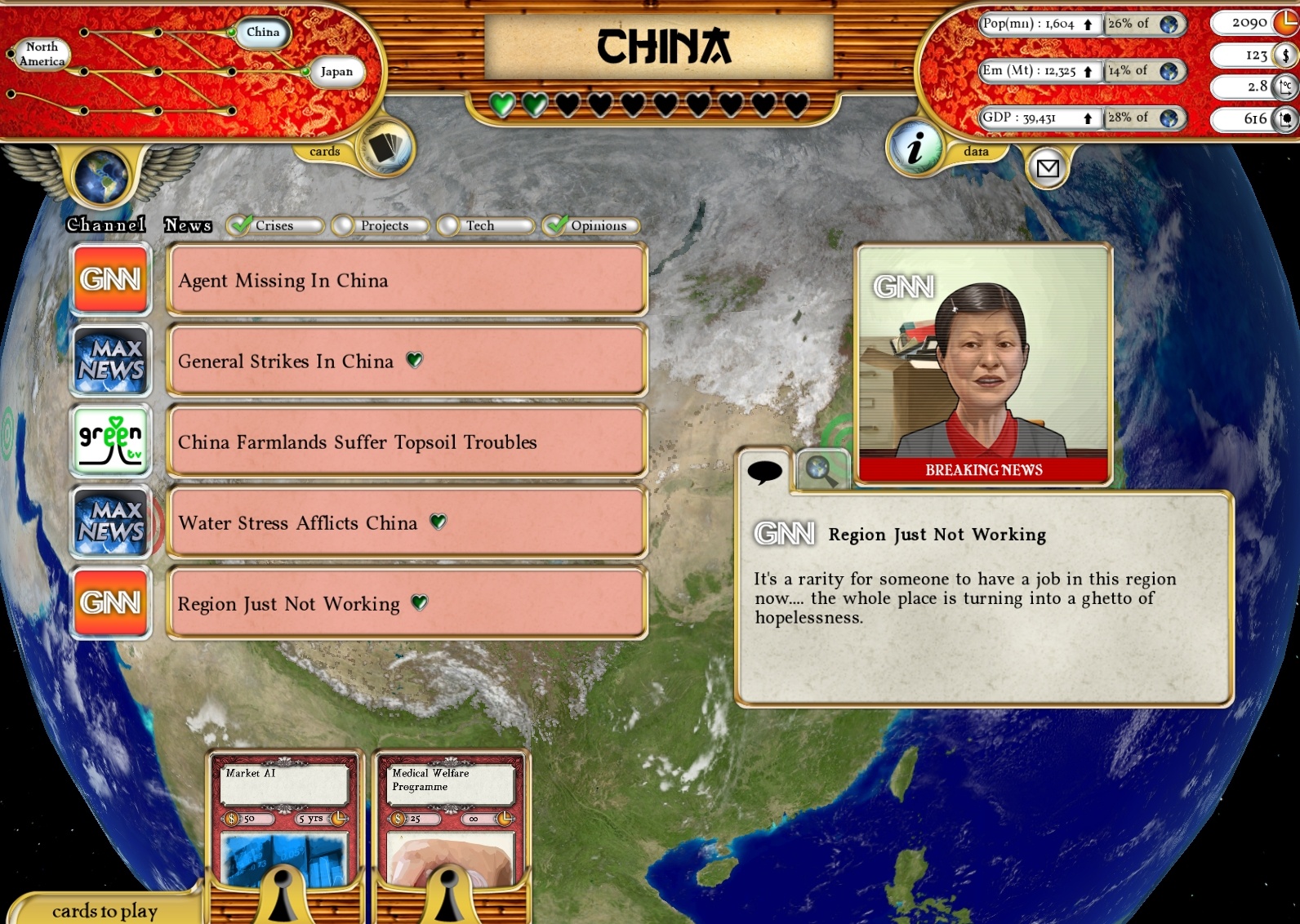
    There is a world made up of 12 regions. You play cards in each region to set policy which then changes the region, your selection of cards, and the world.

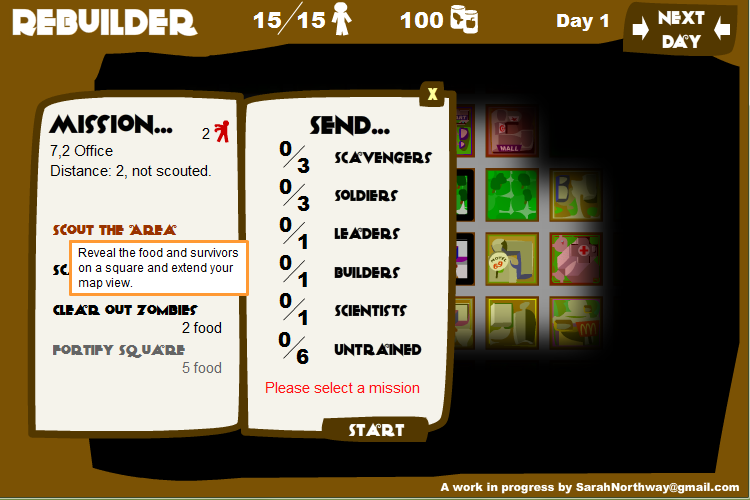
    So far so good. This also describes (minus the weird playingcards metaphor) great games like SimCity, Cliffski’s games Kudos and Democracy, and Sarah’s game Rebuild.

    You start out playing all of these games the same. You start playing the metaphor (People are being killed by zombies? I should find more soldiers I guess) and as you progress you start playing the rules of the game instead (well I need 6 soldiers and I know that on average 2 zombies a turn show up at the walls so I have 3 turns to find more soldiers). You get better at the game by reverse engineering it. That’s why they’re fun because you are learning the rules behind the metaphor and thus get better at the game.

    To be able to do this you need a couple to things from the game. They are listed up there at the top. Unfortunately Fate of the World has some serious problems on the predictability side of things.

    Lets take an example. There is a card called “Commit to Renewables”. It “influences” a region towards renewable energy. When I play the card it will make graphs move around. Graphs like the one on the right. There are a lot of graphs because there are a lot of underlying systems. The basics of “Commit to Renewables” are pretty simple. It makes the things in the “Renewables” graph like solar and tidal energy go up. But in every country they go up by different amounts. Do I just have to memorise the differences between countries? Should I be scouring the web for material on South African geothermal output? What’s worse is I that can’t figure out how this graph interacts with the many other graphs. Renewables feed into the harmful emissions system and I’m pretty sure I know how that interaction works. They are, however, not independent of the other energy systems so they also feeds into the regional coal, oil, gas and nuclear systems. Those systems each feed into international versions of those systems which in turn flow back into residential, commercial, and industrial systems as well as the happiness system for your region. That system feeds into the happiness system of the world which feeds back into the residential, commercial and industrial systems, as well as the regional outlook, contentment, militancy, and stability systems. Which feed into yet more systems like war and poverty. I have played for two days and am still identifying systems that I didn’t even know existed.

    So we’re in real kill-all-the-butterflies territory here. This throws out the whole “comprehensible actions that lead to comprehensible consequences” portion of our list.

    Even this could potentially be made to work if they got the last bullet point right: “The ability to try the same challenge or a similar challenge over and over allowing you to learn”. And they actually got closer on this one than the previous two. There is only one scenario to play (until you beat it, unlocking the next one). This scenario can not be beaten creatively, or in a myriad of ways. There are a narrow few solutions to each level. This makes The Fate of the World a traditional puzzle game instead of an open Civilizationy strategy game. Your goal is to find the right path through the disastrous future. The one shining road of hope. This is what makes the game somewhat playable. This Groundhog Day like approach to saving the world.

    Unfortunately there is a magic game design number they are breaking. I don’t know what the value of this number is but I know its units. It is (time invested)*(percent chance of failure). It is the price of failure. And it is too god damned high. I am willing to invest an hour to replay the same level as long as each play through provides big insights “oh, people who are unhappy go to war”. If I get enough insights per minute then It’s worth playing through again. As I figure out the big systems, however, I’m getting fewer and fewer insights per minute because the little interactions are harder and harder to untangle. That’s why most games are about learning just a few systems and mabey layering in more systems over time. It keeps us learning at a reasonable rate.

    They could have fixed this game by ripping out three quarters of the systems and focusing on the few that express the soul of the problem. Or they could have given us tiny little problems to solve in this labyrinth of rules (probably not as fun). As it is I find the game frustrating and opaque although if you’re looking for a massive knot to untangle while blindfolded you couldn’t do better.

    One last note. Bizarrely, this game is based on a previous flash game by the same developers that has the opposite problems! It lays all the rules out at your feet leaving you nothing to learn. Try it out here. Don’t assume it captures the feel of Fate of the World, it is in many ways it’s shadowy opposite.

  • SpaceChem != Autocad

    People have been making video games for like 50 years and they’re pretty fun and intuitive. We’ve also been making apps like word processors, spreadsheets, and Autocad for 50 years. And they are not fun or intuitive. Why is that? Can we learn anything about game design from this question? Enter Zach Barth’s SpaceChem.

    I’m pretty giddy that I have a place I get to talk about games I love now. Expect some posts featuring my favorite games from the last few years. SpaceChem is one of my favorite games ever. It is wonderfully hard-fun. It’s all about learning, finding tricks, and letting your brain slowly sink into the game until you absorb its very essence. Lo’ you have become a master where once you were but a wobbly newborn colt. SpaceChem is a very good game. Unfortunately today I come not to praise Ceaser, but to bury him.

    Since this game is so good everyone must be playing it right? It’s crazy that you’ve never played it eh? Obviously a good rigorous playthrough is in order. Here is the free demo (there is also a mac version). Alright. Tried it? Got through the demo? Ready for more? No? You didn’t get anywhere and the game seems confusing and overcomplicated? Well that’s because it is. I’ve tried to get everyone I know to play it and I think I’ve managed to make Zach about two sales. No one else I know has beaten it despite my attempts to portray this as a sort of sword-in-the-stone accomplishment. I seriously considered adding a monitary bounty to the feat. People won’t play SpaceChem even if you pay them. This is despite the fact that it is an astoundingly good game.

    I have a theory about why SpaceChem is so very hard to play. It is because Zach aproached interface design from the point of view of an Autocad designer instead of a game designer.

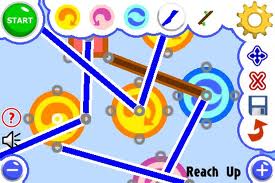
    There is one major difference in the two. The Autocad designer can not change the nature of buildings and the plastic hee-haws that Autocad is made to model. A game designer has complete control over the domain of their problem. It is foolish of us to not abuse this ability! Autocad will never be as fun as Fantastic Contraptin because Autocad has to model the real-world which is messy and complicated. Contraption’s world, on the other hand, is specifically tailored to fit hand in glove with the tools used to interact with it. The real world has depth but depth is akward to manipulate on a 2D screen; depth is thrown out the window. We’ll use a “sticks collide, water rods don’t” metaphor to get us 90% of the way towards depth. In the real world when three things are connected at the same point and one of them has an engine attached you have to specify where that engine is. You can’t just say “one of them is a wheel and the wheel spins” wheels spin about other things. Which of the two other things does it spin about? Nope, that question goes out the window, we tailor the world so that it doesn’t matter rather than tailor the interface to perfectly model the world.

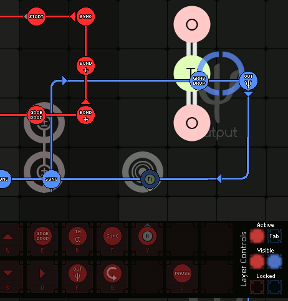
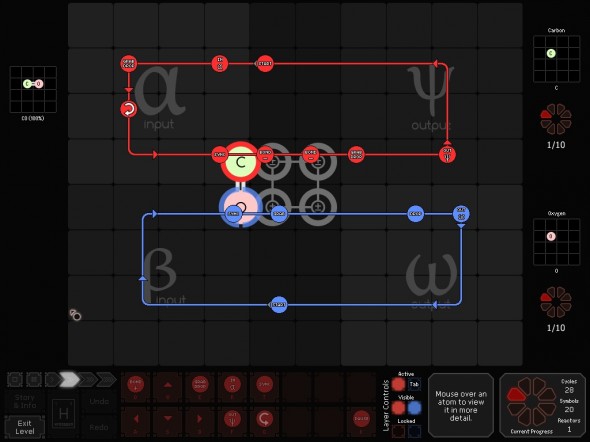
    This is why SpaceChem feels overcomplicated. The game-world makes no concessions to the interface, to the tools used to interact with it. Since you played the demo I can discuss one example and how I would do things differently. You know how the game is about grabbing a couple of circles from the left hand side of the screen, doing some stuff to them, and then passing them off on the right hand side of the screen. You can see that quite clearly in this screenshot. See, over on the left you can see where you pick them up, and then see, over on the right you can see where you drop them off. Excpet no, you can’t. The drop-off and pick up spots are only nebulously marked. They are the large squares marked with a greek letter. You can drop stuff off anywhere inside that square and stuff gets dropped in… well there’s a tiny little diagram on the left that tells you where it’s dropped in and you just have to do the mapping yourself.

    This is not how most games would solve the “place to pick it up and place to drop it off” problem. Most games would have a little outline on the ground of where stuff will come in on the left and another little outline on the ground of where stuff must be dropped off on the right. This would make the goal of the game crystal clear to players. It would make the perceived level of complexity go down. SpaceChem, though, is not most games. Its dreams encompass not just the rolling hills but also the jagged snowy peaks, and as such, this solution would not work.

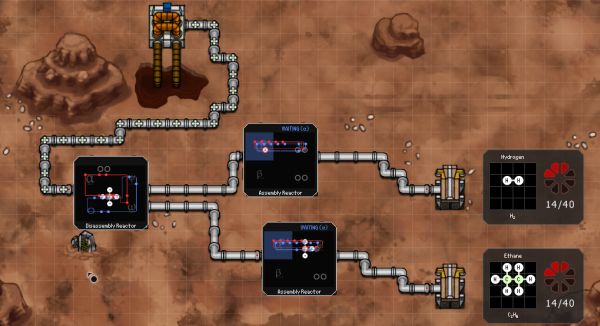
    See in SpaceChem you build these little machines. But in some levels you also build several machines at once, linking them all up to eachother with pipes. Like in this screen shot over here on the right. Now you see why printing outlines on the ground doesn’t work. Since the player decides what gets spit out of these machines and where they go you can’t have the strictly-enforced outlines. The game simply doesn’t know what’s comming in and going out. Whats worse is that advanced players will pass more than one thing into the same pipe in different and odd proportions.

    So the game as it is designed can not have these nice outlines that tell new players how to play SpaceChem. To solve this interface problem we need to change the game design. Instead of letting the players build little machines that take in anything and spit out anything lets give them a selection of machines with pre-set inputs and outputs. We can include all the machines necessary for the intended solution, a couple of common alternates, and mabey a few red herrings/challenges for advanced players.

    Now the interface is clearer, the perceived complexity is lower, and more people will play (and buy) SpaceChem. The pipes-levels definitely lose some of their magic but the pre-set machines offer another kind of challenge that might turn out to be almost as strong.

    There are other ways which the domain of SpaceChem could be changed to better suit the interface and I don’t know if rounding all the edges off it would have made me love it less. It is certainly possible. But damn if I don’t just want everyone in the world to be able to enjoy my games. And damn it if it isn’t incredibly frustrating to try to get my friends to play SpaceChem.

    But you’re made of sterner stuff. Go buy SpaceChem and remember, if you don’t find it fun it’s only because Zach overestimated your intelligence.

  • False Unicorn Horns

    The game I’m working on is really really fun. When I first played it I had near orgasms of delight. The problem is, it’s really really hard. I want to give players orgasms of delight but to experience them they have to learn a lot of stuff. I’ve decided to try to solve this problem with a false unicorn horn.

    No one I ever try to explain this to has ever seen The Last Unicorn (which is a shame) so I will fill you in on what I’m talking about. In the movie there is a last unicorn. It also contains Mommy Fortuna, a relatively evil witch who keeps a traveling sideshow of rare animals. Most of her animals are very humdrum but she uses a magic spell to make it appear to onlookers as if they are manticores and satyrs. The pertinent idea here comes up when Mommy Fortuna captures our Unicorn. Since unicorn horns are invisible to the general public she magically applies a false one. This is a great idea that I want to steal.

    Since the game is so hard players will never learn how to play it if I just explain all the buttons and throw them in. Red-faced, they will exclaim “this is just a horse” to each-other between quaffs of ale, have a good laugh, and then move on. I need to apply a false horn so that people will play the game even when it is not at its orgasm inducing peak in order to bring them great joy later on when they can see the horn for real. I think there are a couple ways to do this and I want make use of as many as I can. More ideas are appreciated, there is a comment feature on this blog.

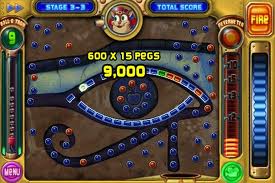
    Abuse of Dopamine Receptors. The ultimate false unicorn horn, behavioural psychologists have done a pretty good job of ferreting out the strings attached to our brain that make us dance and have called them dopamine receptors. Things that our brain loves: bright colours, intermittent rewards, a feeling of progress, close calls, basically Peggle. Basically our brains were put here on earth to play Peggle.

    Our brain loves these things because they are hints that we are learning something. And god DAMN do we love to learn. The problem with Peggle is that any player-skill is swamped out by the random element. So, like gambling, it’s just a trick. An illusion. It tickles the brain making us feel like we’re learning something and improving but we aren’t. The horn on the unicorn is a fake. There are a lot of other games with big fake horns, like Farmville, WoW, and Drop7 (actually I’m willing to budge on Drop7 if someone can find me a player that reliably gets very high scores).

    So anyway, I have to get some fake learning into my game so I can get people to the real learning. I’m not really very good at this and it will take some serious study. Time to download WoW I guess.

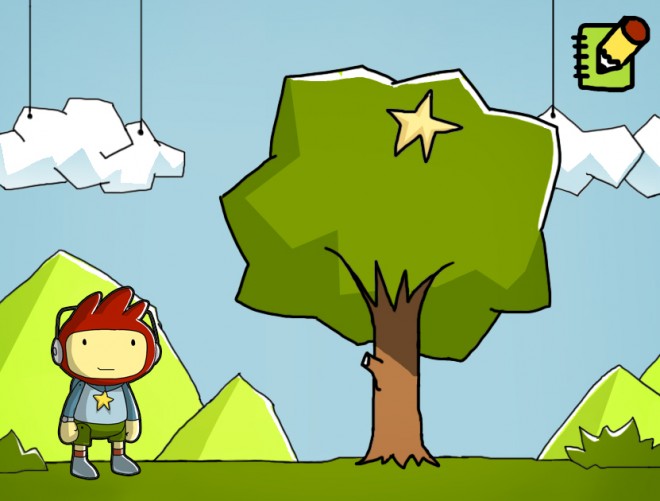
    The other way that I can think of to paste a false horn on this unicorn is the “puzzle mode” strategy. The idea here is to provide a totaly different game mode from the one I want players to eventually play. But a game mode that has a learning curve. You can think of it as a very extended tutorial. Or like an upside-down Scribblenauts. Scribblenaut’s orgasms came from the sandbox mode. Making Scribblenauts the best kind of game. Everyone could see the horn right from the beginning. But you can’t really sell toys right now. Well not un-musical ones anyway. So they had to affix a false horn to get we who aren’t good without a reward structure to fondle the real horn.

    I have the opposite problem but want to take the same approach. I’m planning to have a fairly long set of puzzles that are more in line with “permute choices until you win” style of play like Splitter or Angrybirds. Which give you all the skills you need to play the more Aramdillo Runy, Contraptiony game later on.

    I have hacked out a small level-set to try this out on just a very few testers and the results have been. Well, lackluster is the word. So I definitely have a road ahead. Fortunately the puzzle design was pretty crappy and it had no Peggle elements so I might still manage to weave a horn that will wow the beer-soaked crowds. I can’t quite remember how The Last Unicorn ends but I’m pretty sure Mommy Fortuna comes out on top in the end.